 it
it en
en fr
fr de
de es
es

How a beach is formed: sand, dunes and sea in balance
Where does sand come from?
In short: Sand is formed from fragments of rock and shells carried by the sea and wind.
Every grain of sand has a thousand-year history. The sea erodes coastal rocks, rivers carry sediments, and the wind deposits them along the shoreline.
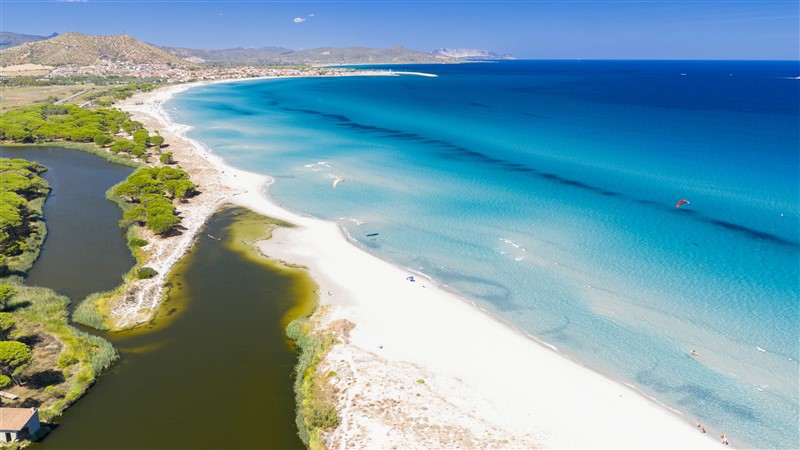
In Gallura, the sand is often light-coloured and fine because it is composed of quartz and shell fragments, the result of the combined action of the sea, sun and time.
Perfect examples of these characteristics can be seen on beaches such as Porto Taverna, Cala Brandinchi and Lu Impostu, where the white grains reflect the light and make the water a brilliant turquoise. These beaches show how nature and time work together to create landscapes of rare beauty.
The role of wind and dunes
In short: Wind moves sand and creates dunes that protect the beach.
Coastal dunes are natural barriers that defend the beach from erosion. In Sardinia, the Mistral and Sirocco winds carry sand inland, where it accumulates and is fixed by pioneer plants such as sea daffodils and marram grass.
These plants have deep roots and prevent the wind from blowing the sand away: without them, the beaches would disappear in a matter of years.
The importance of protecting dunes
In short: Trampling or damaging the dunes compromises the balance of the entire coastline.
Many stretches of the Gallura coastline — such as Porto Taverna and Cala Brandinchi — have designated paths to protect the dunes. Walking outside the marked paths or placing parasols on the dunes damages the roots and accelerates erosion. Wooden walkways and restricted areas are not limitations, but environmental protection measures.
The example of Porto Taverna
In short: Porto Taverna is one of the best-preserved beaches on the east coast thanks to sustainable management.
In recent years, access corridors and protective barriers have been installed. The result is clear to see: the beach retains its natural shape and the water remains crystal clear. Guests at Residence Lu Nibareddu can reach it on foot and actively contribute to keeping it intact.
FAQ – Beaches and dunes
Why is the sand at Porto Taverna so light in colour? Because of its high quartz and shell fragment content.
Can you walk across the dunes? Only on the marked paths. Walking on them is prohibited.
Do the dunes really move? Yes, they move slowly with the wind and are shaped over time.
How can I help preserve them? Use the wooden walkways and do not remove plants or sand.
