 it
it en
en fr
fr de
de es
es

Granite, cork and wood: the soul of Gallura
Why materials matter: identity and landscape
In short: In Gallura, building means respecting the land. Granite, cork and wood are materials that originate and live in the same landscape.
Gallura is one of the most recognisable areas of Sardinia thanks to its landscape shaped by stone, wind and light. The houses, stazzi (traditional farmhouses) and even tourist facilities maintain a direct link with the land: granite, cork and wood are not aesthetic choices, but cultural ones. These materials tell the story of a region that has always built in harmony with what nature had to offer, and today they also represent a form of authentic sustainability.
Granite: the backbone of Gallura
In short: Local granite is the symbolic stone of Gallura, resistant and chromatically perfect for blending in with nature.
Sardinian granite is an ancient rock that can be found everywhere: in the boulders sculpted by the Mistral wind, in dry stone walls, and in rural churches. It is a durable, breathable, and thermally stable material, ideal for buildings exposed to the sun and sea salt. Warm colours — pink, grey, golden — blend in with the surrounding landscape: this is why many tourist facilities on the coast, such as our Residence Lu Nibareddu, use local granite finishes and flooring, in visual continuity with Tavolara and the cliffs of Porto Taverna.
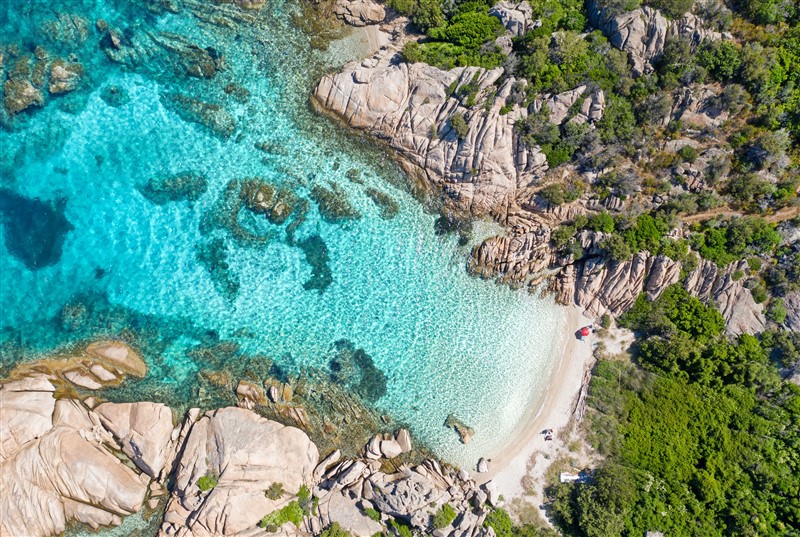
Today, Gallura granite is used not only in architecture but also in contemporary design: washbasins, furniture, sculptures and cladding made in Sardinia. A natural and fascinating example of polished granite as a work of art can be found in the picturesque Cala Girgolu, also known as “Sassi Piatti” (flat stones), a small cove where the wind and sea have carved unique and smooth shapes over time. It can be reached with a short excursion from the Residence, along a scenic path that crosses the Mediterranean scrub and offers picturesque views of the coast. Once there, you can enjoy the sunset when the polished rocks turn pink and gold, creating a natural spectacle of great beauty.
Cork: the living skin of Sardinia
In short: Cork is the most representative natural material of Gallura: ecological, renewable and a symbol of Sardinian craftsmanship.
Cork (bark of Quercus suber) is one of Gallura’s most precious resources. It is harvested every 9–10 years without damaging the tree, making it a 100% renewable and biodegradable material.
In construction, cork is valued for its insulating and acoustic qualities. It is used in:
-
Thermal insulation panels;
-
Natural interior cladding;
-
Handcrafted decorations and furnishing accessories.
The Gallura cork industry, concentrated between Calangianus and Tempio Pausania, is a concrete example of a local circular economy. Using cork in construction also means preserving the woodland landscape that produces it.
Wood: tradition and modern comfort
In short: Wood connects the tradition of Gallura’s stazzi to contemporary tourism, offering warmth, aesthetics and sustainability.
In ancient rural dwellings, wood was the soul of the interiors: exposed beams, simple fixtures, handmade furniture. Today it is reinterpreted in a modern key with laminated wood and local essences such as chestnut and juniper.
Wood also plays a leading role in new eco-sustainable tourist facilities, such as the glamping tents of the Borgo di Campagna project, one of our facilities located in the countryside of Loiri Porto San Paolo. Here, wood, combined with natural fabrics and local materials, creates an elegant and welcoming environment where design, comfort and nature come together. Guests can enjoy the glamping experience surrounded by greenery, just a few minutes from the beaches of Porto Taverna and San Teodoro.
It is a material that “breathes” with the environment and contributes to a more balanced living experience.
Gallura architecture: harmony between man and nature
In short: Gallura’s strength lies in its architectural balance: building with local materials is a cultural gesture, not an aesthetic one.
Gallura architecture is sober, functional, and stems from a direct relationship with the climate and the territory. The stazzi — typical stone and wood houses — represent the roots of this philosophy: thick walls, small windows, and low roofs to protect from the wind.
Many tourist facilities, such as the Juannareddu stazzi of Case di Mara, now follow these principles:
-
Use of local materials (granite and wood);
-
Natural colours that blend into the landscape;
-
Attention to energy efficiency and climatic comfort.
Building in Gallura is not just a construction project, but a dialogue with the environment.
The contemporary value of local materials
In short: Using Gallura materials today means sustainability, identity and lasting comfort.
In modern tourism, choosing structures built with local materials means:
-
Reducing environmental impact;
-
Experiencing spaces that are consistent with the territory;
-
Perceiving natural and authentic well-being.
Contemporary travellers seek authentic experiences, and architecture also becomes part of the story of a place. Granite, cork and wood are not just materials: they are witnesses to the Sardinian soul, which accompanies every stay in Gallura.
FAQ – Frequently asked questions about materials from Gallura
Why is granite used so much in Gallura? Because it is abundant, resistant and blends perfectly into the local landscape.
Is cork really sustainable? Yes, it is harvested without cutting down the tree and is 100% renewable.
Which woods are most commonly found in Gallura homes? Juniper, chestnut and oak, prized for their durability and natural scent.
Do modern tourist facilities respect this tradition? Yes, many reinterpret traditional materials in a modern key.
